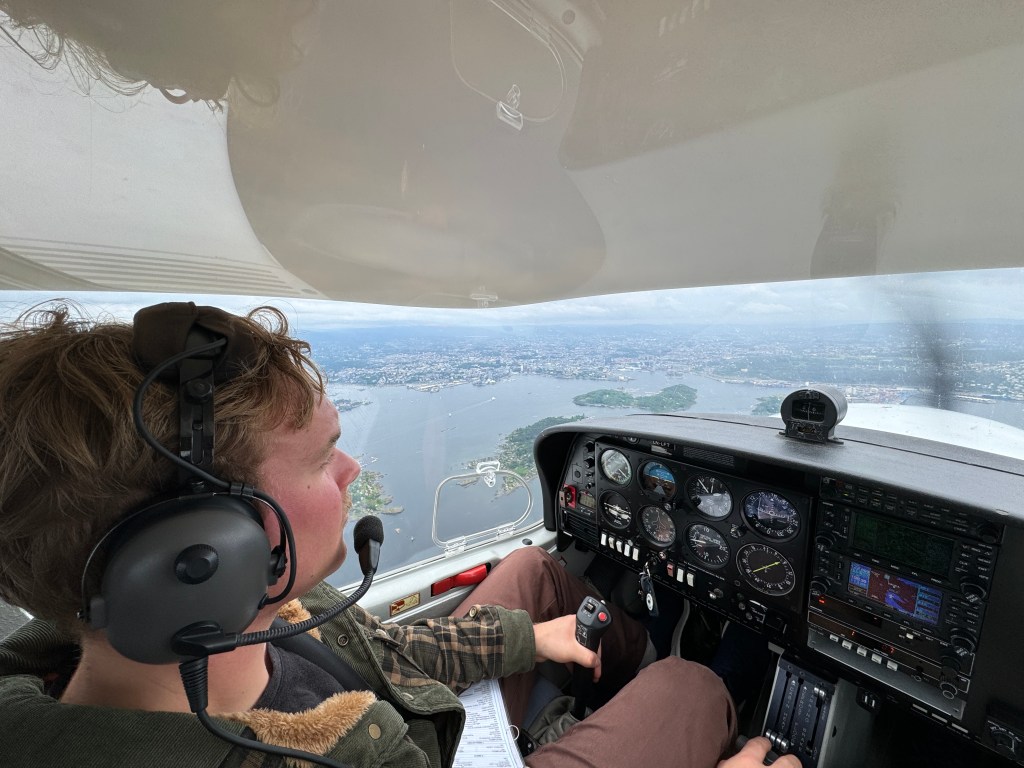
It was a cold Thursday morning in a small town outside Oslo, Norway. I was in the final days of my journey through my second home, Norway—a country that will always hold a special place in my heart. My parents had arranged one last gift for me before my flight home the next day, and to my surprise, I was fortunate enough to have the chance to fly over the city of Oslo. Without access to a car, my only means of transportation were walking and taking the train, but I didn’t mind. I enjoy walking—it’s a unique perk that European cities offer.
Following my personal rule of always being early to appointments and events, I arrived at Kjeller Air Force Base an hour ahead of schedule. However, I was confused about where to meet my instructor. Lost and bewildered, I stood before the gates, waiting for something to happen. Suddenly, a tall man approached me, startling me slightly since I had my headphones on. He got my attention and asked if I wanted to observe the aircraft in the hangar area. Of course, I said yes, and he let me through.
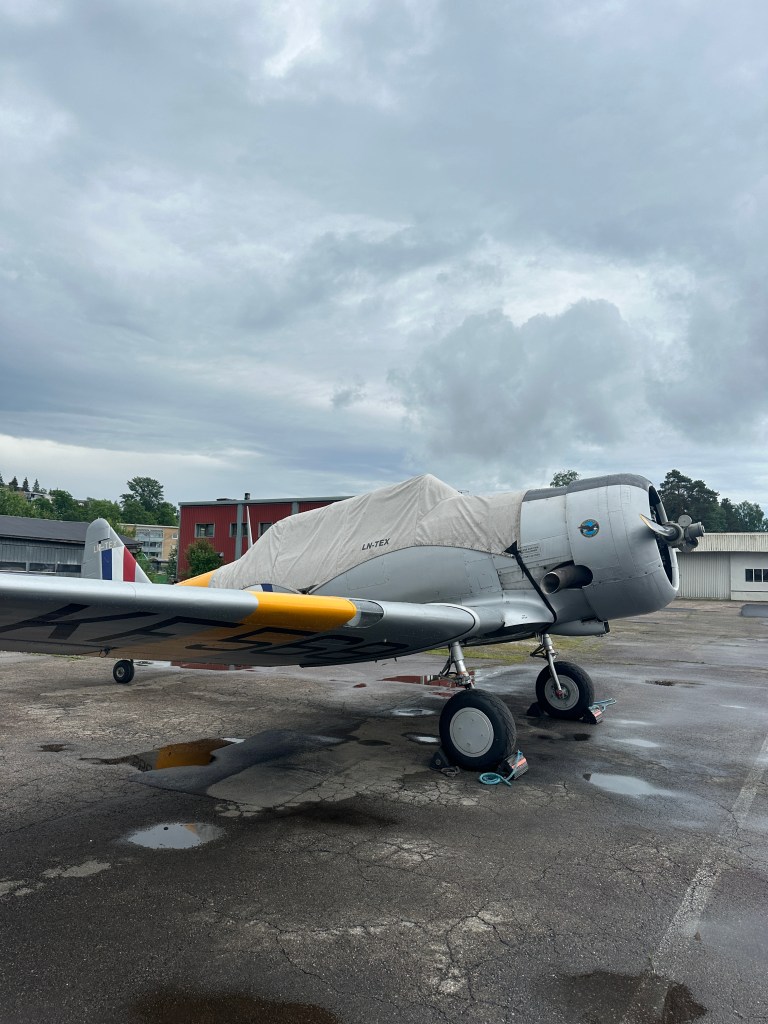
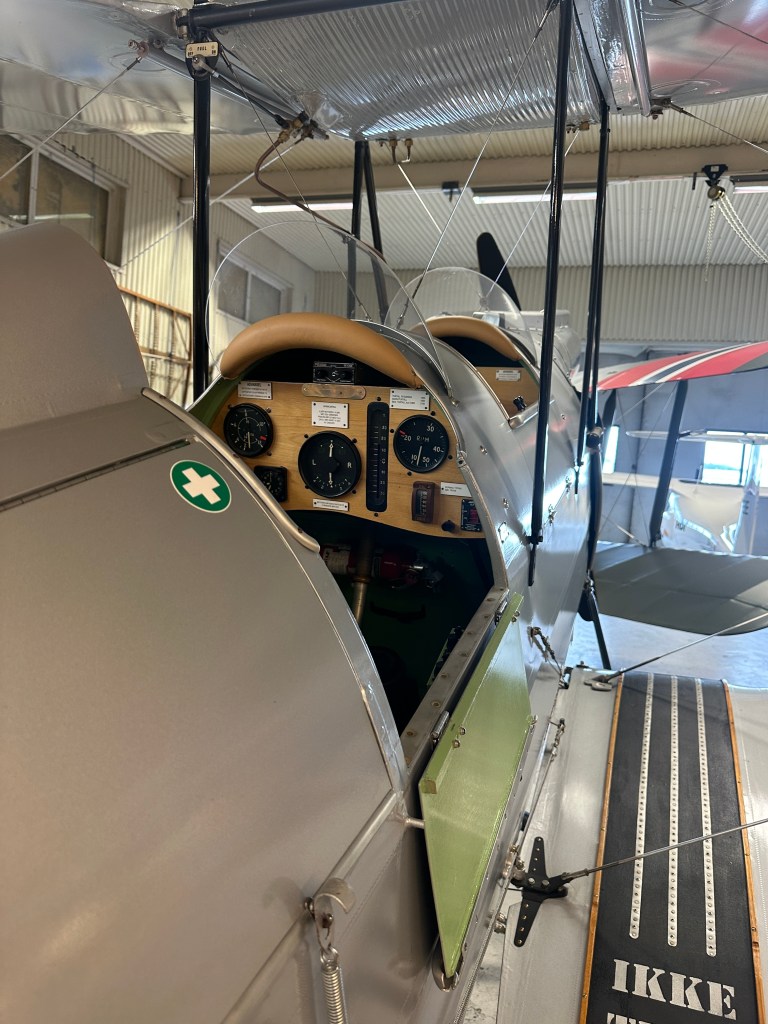
He explained that the next day, there would be an annual air show displaying dozens of historical aircraft. Since the airport had been taken over by the Germans during World War II, it held a niche place in history, and many pilots would park their warplanes in these hangars. Nowadays, the airport is no longer primarily used for military operations but rather for flying clubs and individuals passionate about restoring historical aircraft. Walking around and seeing these old planes—many still capable of flight—was a surreal experience. Hearing the roar of their engines in the air felt like a dream come true.

After a fascinating tour of the airport hangars, it was finally time to fly. However, there was a slight hiccup. During my tour, I had noticed a group of mechanics working on a DA-40. The plane had a flat tire and showed signs of not having been flown in quite some time. At that moment, I had no idea that this was the aircraft I would be flying. When my instructor informed me, I felt a bit nervous. Up to this point, I had only completed three flight lessons. One key difference I had noticed between American-style and European-style flying was the decision-making process regarding when to fly and when not to. The mechanics replaced the tire and assured us that the plane was ready to go, so we proceeded with the flight.

The weather that day wasn’t ideal either—a thunderstorm was approaching, and we had only a few hours before conditions would become completely unfavorable. Since this would be my only opportunity to fly in the rain, we decided to take off. It was both beautiful and turbulent at times, though not as rough as one might expect when flying through precipitation.
Flying over a city I love was breathtaking. Seeing it from above, rather than from the ground, was an entirely different experience. Looking back at my flight log, I realized that taking off from Kjeller Air Force Base marked the first time I had ever lifted off from the ground in an airplane.
This flight will always be one of my favorites for many reasons. It would mark the beginning of my flying career, and be fortunate to have it in one of my favorite places. It was pretty funny, and I did not remember the maneuvers we practiced or the vital information my instructor told me. I remembered the snowy grounds, the green, luscious hills, and the blue, smooth waters of the fjords. It was beautiful, something I would never get again. The weather and skies were one in a million that day as a massive thunderstorm rolled through in the next few hours and covered the sky with lightning and thunder.
Overall, flying in a different country is an experience I highly recommend—especially for student pilots accustomed to flying only in American airspace. As pilots, we must embrace discomfort to prepare ourselves for real-world flying conditions. The more we learn to stay composed in stressful situations, the better we will be as pilots. That ability to remain calm under pressure will be a game-changer in our future aviation careers.



 Journeymen
Leave a comment